
A Triad Built to Solve Combination Therapy
CombixBio was spun out of UCLA by three researchers who have already published together for years, bridging the two disciplines this problem demands: high-throughput functional genomics and trustworthy, mechanistic AI. That existing track record is why we skipped the "co-founder dating" phase, the wet-lab and the AI have been co-designed from day one.

Founding Team

Assay Development & Functional Genomics
Expert in high-content cell assays and CRISPR engineering for functional screening data generation. UCLA Bioengineering Ph.D., combining a physics foundation with quantitative, imaging-based biology.
Dr. Bermudez earned her Ph.D. in Bioengineering at UCLA, specializing in high-content screening, fluorescent/live-cell imaging, and CRISPR-based functional genomics. She was lead author on work, featured by UCLA, showing how nucleus size coordinates chromatin modifications and gene activity, and has co-authored many AI-imaging and mechanobiology studies. At CombixBio she owns the proprietary dual-gene CRISPR screening that produces the ground-truth data our models learn from.
Alexandra Bermudez Ph.D.
Cho-Jui Hsieh Ph.D.
Trustworthy AI Architecture
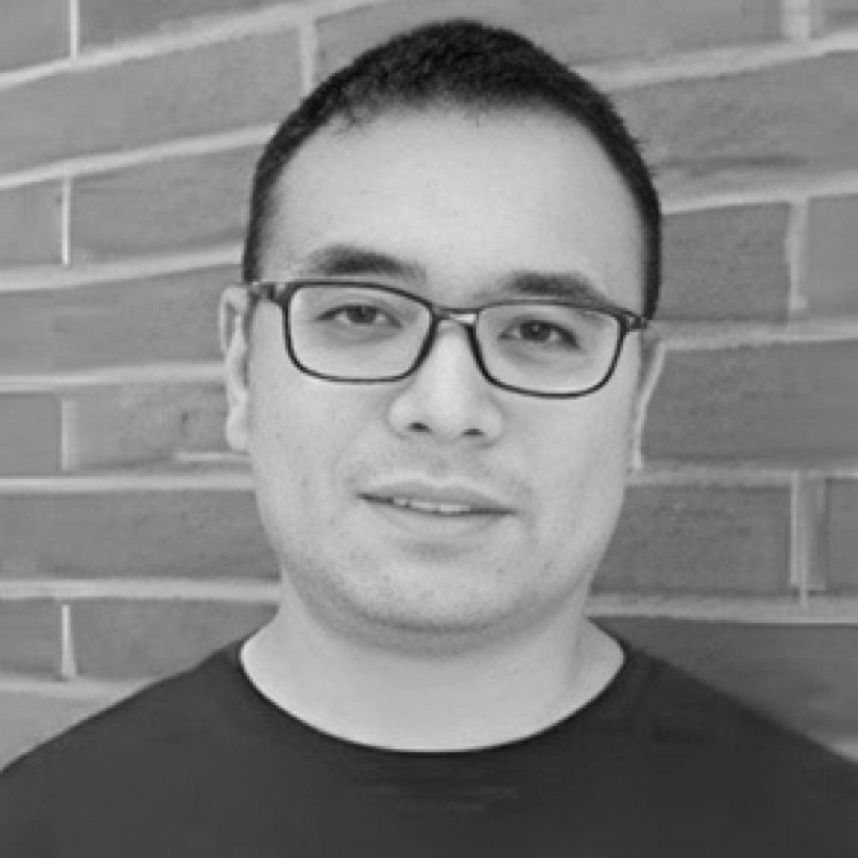
Renowned expert in trustworthy, large-scale AI. Associate Professor of Computer Science at UCLA, with ~64,000 citations, whose work spans large-model training, adversarial robustness, and interpretable machine learning.
Dr. Hsieh is an Associate Professor of Computer Science at UCLA (Ph.D., UT Austin) and one of the most highly cited researchers in machine-learning systems. He co-created the LAMB optimizer that trained BERT in 76 minutes, now a standard for large-model training, and authored the dual-coordinate-descent method at the core of LIBLINEAR, one of the most widely used ML libraries in the world. His research on adversarial robustness, model interpretability, and efficient LLMs directly underpins CombixBio's "causal, not correlative," locally-hosted AI.

Neil Lin Ph.D.
Bioengineering & Systems Biology
Systems bioengineer bridging the computational and experimental divide. Assistant Professor of Bioengineering and Mechanical & Aerospace Engineering at UCLA, where his lab pioneers mechanobiology, high-content phenotypic screening, and AI-based analysis of living cells.
Dr. Lin is an Associate Professor at UCLA and a member of the Broad Stem Cell Research Center. He earned his Ph.D. in Physics at Cornell University and completed a postdoctoral fellowship at Harvard, engineering in-vitro systems that recapitulate human organ function. His research lab combines high-content pharmacological screening and machine learning to decode cell fate. At CombixBio he leads the functional-genomics engine and the wet-lab-to-model pipeline.